

Key Takeaways
- Bravecto Plus lasts twice as long per dose (every 2 months vs. monthly), making it simpler to manage for most cat owners.
- NexGard Combo is the only one of the two that covers tapeworms – a critical difference for outdoor, roaming, or hunting cats.
- Bravecto Plus generally costs less per year (~$197-$336) compared to NexGard Combo (~$365-$464+), but the right choice depends on your cat’s lifestyle and parasite risks.
- Both products carry the FDA’s isoxazoline class warning for potential neurologic side effects – something every cat owner should discuss with their vet before starting either treatment.
- Keep reading to find out which product fits your cat’s specific lifestyle, age, and risk profile.
Both Bravecto Plus and NexGard Combo are topical parasite preventives covering fleas, ticks, heartworm, roundworms, and hookworms. On the surface, they look nearly identical. But one lasts twice as long per dose, and the other covers a parasite the first one misses entirely. That single difference – tapeworm coverage – is often what determines which product is the right fit.


One Lasts Twice as Long – But Skips Tapeworms
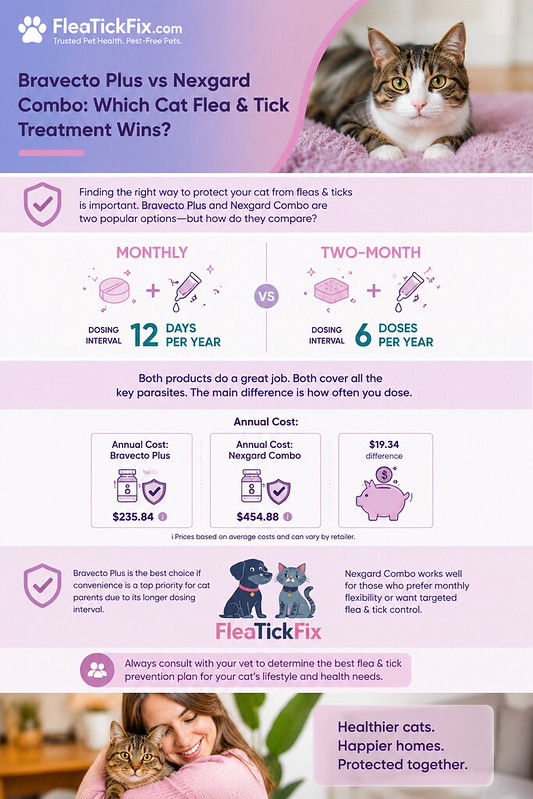
Bravecto Plus is applied once every two months, providing 8 weeks of protection per dose. NexGard Combo requires monthly application, meaning 12 doses a year versus 6. For busy pet owners, that difference in dosing frequency is a genuine convenience advantage – fewer reminders, fewer missed doses, and a simpler routine overall.
The tradeoff: Bravecto Plus does not cover tapeworms. NexGard Combo does. That gap matters more than it might seem, and it shapes most of the decision-making that follows. FleaTickFix breaks down these kinds of product-level differences to help cat owners cut through the noise and make a well-informed choice.
Here is where the two products overlap - and where they part ways:
| Parasite | Bravecto Plus | NexGard Combo |
|---|---|---|
| Fleas | ✔ | ✔ |
| Ticks (multiple species) |
✔ (black-legged, American dog, Asian longhorned, Gulf Coast) |
✔ (black-legged, lone star) |
| Heartworm | ✔ | ✔ |
| Roundworms | ✔ | ✔ |
| Hookworms | ✔ | ✔ |
| Tapeworms | ✘ | ✔ |
Bravecto Plus covers a wider range of tick species – including the Asian longhorned tick and Gulf Coast tick – which NexGard Combo does not list. Even so, the absence of tapeworm coverage is a meaningful gap that cannot be overlooked depending on where your cat lives and what it gets into.
Where Bravecto Plus Falls Short: No Tapeworm Coverage
Cats typically acquire tapeworms one of two ways: by ingesting a flea carrying tapeworm larvae, or by hunting and eating a small prey animal such as a mouse or bird. Both scenarios are common, especially in cats that go outdoors. Because fleas themselves are a transmission vehicle, even a cat that is well-protected against fleas can still face tapeworm risk if exposure occurs before the flea dies. Bravecto Plus carries no label claim for tapeworms, so owners who need that coverage will need to supplement separately or switch products.
NexGard Combo’s Tapeworm Coverage Advantage
NexGard Combo contains esafoxolaner, eprinomectin, and praziquantel – the last of which specifically targets tapeworms. It is the most complete single-product option currently available for cats in this class of topical preventives. For cats with any meaningful outdoor exposure, that added layer of coverage makes NexGard Combo the stronger all-around choice.
Dosing Schedules and Annual Cost
6 Doses vs. 12 Doses Per Year
Bravecto Plus requires 6 doses per year; NexGard Combo requires 12. Fewer doses means fewer opportunities to forget – and consistent dosing is how either product actually works. A missed month with NexGard Combo creates a real gap in protection, while a missed dose with Bravecto Plus allows a slightly longer buffer before coverage lapses.
Bravecto Plus Costs ~$197-$336/Year vs. NexGard Combo’s ~$365+
Pricing varies by cat weight and where you purchase, but using common retail figures as a reference point:
- Bravecto Plus: ~$55.99 per dose x 6 doses = approximately $335.94/year at the higher end; smaller weight bands can bring the annual total closer to $197.
- NexGard Combo: ~$38.69 per dose x 12 doses = approximately $464.28/year at single-dose pricing; buying in multi-packs lowers this somewhat, but the annual cost still typically exceeds $365.
Bravecto Plus is generally the more affordable option annually. The question is whether the savings are worth skipping tapeworm coverage – and for many indoor cats, they may well be.
Which Cats Can Use Each Product
Bravecto Plus: Minimum Age and Weight Requirements
Bravecto Plus is approved for cats and kittens weighing at least 2.6 lbs. Minimum age requirements vary by label – some versions indicate 9 weeks of age, while others state 6 months. Check the specific product label or confirm with your vet to ensure eligibility for younger cats.
NexGard Combo: 8 Weeks and 1.8 lbs Minimum
NexGard Combo can be used in kittens as young as 8 weeks old, weighing at least 1.8 lbs. That significantly widens the eligible population, making it the only option of the two for younger, lighter kittens that still need parasite protection. If you have recently brought home a young kitten, NexGard Combo is the product that fits the label.
Side Effects Both Owners Should Know
FDA’s Isoxazoline Neurologic Warning for Both Products
Both Bravecto Plus and NexGard Combo belong to the isoxazoline class of flea and tick preventives. The FDA has issued a fact sheet noting that neurological adverse reactions – including tremors, ataxia (wobbliness), and seizures – have been reported in some animals. The FDA also notes that seizures may occur even in pets with no prior seizure history. This warning applies to both products equally; neither one has a cleaner safety record than the other in this regard.
Before starting either product on a cat with a known history of seizures or significant neurological issues, a conversation with a veterinarian is essential.
Product-Specific Common Reactions to Watch For
Serious neurological effects are uncommon. More typical post-treatment reactions include:
- Vomiting
- Diarrhea
- Lethargy
- Decreased appetite
These usually appear within 24 hours of application and tend to resolve on their own. If symptoms persist, worsen, or include tremors or staggering, contact a vet immediately. Also worth noting: use of Bravecto Plus in breeding, pregnant, or lactating cats has not been fully evaluated. For NexGard Combo, safety in breeding, pregnant, and lactating queens has been evaluated and demonstrated in some labeling and studies, though guidance varies by region – consult your vet before starting treatment in those situations.
Indoor vs. Outdoor: Which Cat Needs Which?
Cat lifestyle is arguably the single most important filter when choosing between these two products. A quick breakdown:
- Strictly indoor cat, low parasite risk: Bravecto Plus – fewer doses, solid core coverage, lower annual cost.
- Indoor cat with known flea history: Either product works; tapeworm risk is lower if fleas are controlled before ingestion occurs.
- Outdoor or indoor-outdoor cat: NexGard Combo – broader spectrum, tapeworm coverage addresses the elevated risk that comes with outdoor access.
- Hunting cat: NexGard Combo – prey animals are a direct tapeworm transmission route, and this product is the only one of the two that addresses it.
Why Outdoor and Hunting Cats Need Tapeworm Coverage Too
An outdoor cat does not need to look visibly sick to be carrying tapeworms. Cats that hunt mice, birds, or other small animals are regularly exposed to tapeworm larvae, and the infection cycle can continue even when flea populations appear controlled. Monthly dosing with NexGard Combo ensures tapeworm exposure is addressed consistently – not just once or twice a year.
Consult Your Vet – Your Cat’s Lifestyle Makes the Decision
No comparison chart fully replaces a vet visit. Local parasite prevalence varies by region, your cat’s health history matters, and some cats may tolerate one product better than another. The guidance here is meant to sharpen the conversation with your vet, not replace it. Bring the lifestyle context – indoor, outdoor, hunting habits, age, weight – and let the vet weigh in on local risks and any individual health factors that could tip the balance one way or the other.
For more side-by-side breakdowns of cat parasite preventives and cat dewormer comparisons, visit FleaTickFix, where flea, tick, and parasite treatment options for cats and dogs are covered in plain, owner-friendly detail.


 Verified by AmpiFire
